

Nigeria’s fast-growing urban centers are embracing technology-driven systems that are transforming how people live, work, and move. As cities like Lagos and Abuja evolve into more connected and efficient environments, a new model of urban development is emerging, one built on smart infrastructure, sustainability, and long-term economic value.
This shift raises an essential question: what exactly are smart cities, and why are they becoming the future of urban living?
What Are Smart Cities?
Smart cities use technology, data, and integrated infrastructure to improve public services and reduce everyday friction. Core features include smart meters, sensors, digital service platforms, energy-efficient utilities, and coordinated mobility systems.
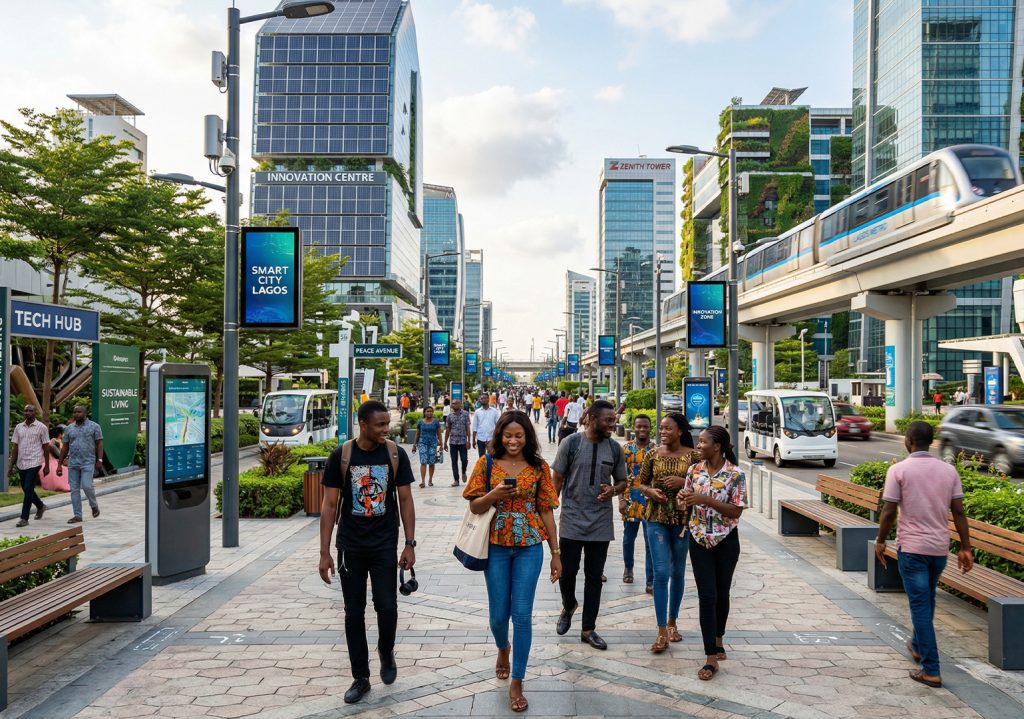
In Nigeria, projects like Eko Atlantic, Centenary City, and emerging tech-enabled districts across Lagos and the FCT show these principles in action from advanced utilities to green corridors and digitally managed estates.
Why It Matters
Smart city systems make urban living more predictable and efficient. They cut operating costs through energy optimization, improve safety through surveillance and access control, speed up essential services, and support better land-use decisions.
For investors and developers, smart features strengthen asset value. For residents, they reduce stress, improve mobility, and enhance quality of life.
Impact:
- Economic: Faster utility access, reduced wastage, and improved infrastructure attract businesses.
- Social: Better public spaces, digital services, and improved amenities support community wellbeing.
- Environmental: Cleaner energy use, improved waste systems, and greener districts reduce pollution and long-term costs.
Challenges:
- Coordination: Smart systems require unified standards and strong government–private collaboration.
- Upfront costs: Infrastructure and technology demand significant initial investment.
- Skills gap: Operation, data management, and maintenance require specialized skills.
- Inclusion risks: Poorly planned systems can widen inequality if access isn’t inclusive.
Final Thoughts
Smart-city thinking is not futuristic, it’s a practical response to rapid urban growth. With clear governance, phased rollouts, and financing that supports affordability, smart approaches can unlock cleaner services, better housing delivery, and stronger investment.
The most effective path forward: start with one high-impact pilot, prove measurable results, then scale citywide.